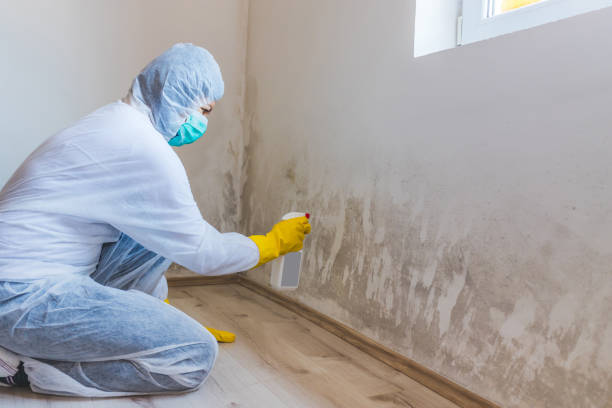
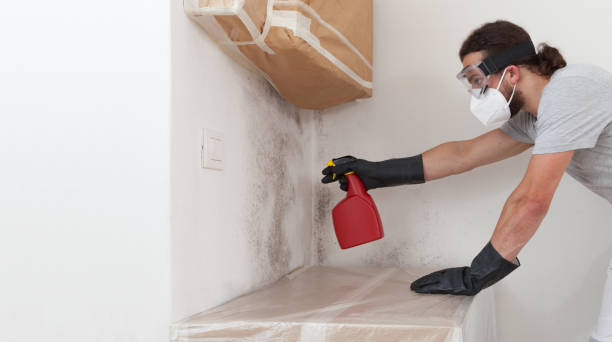
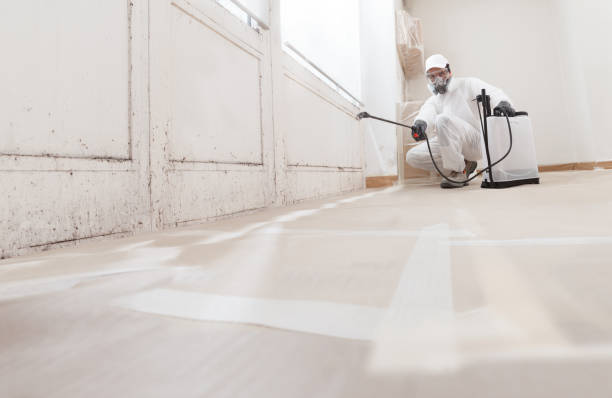
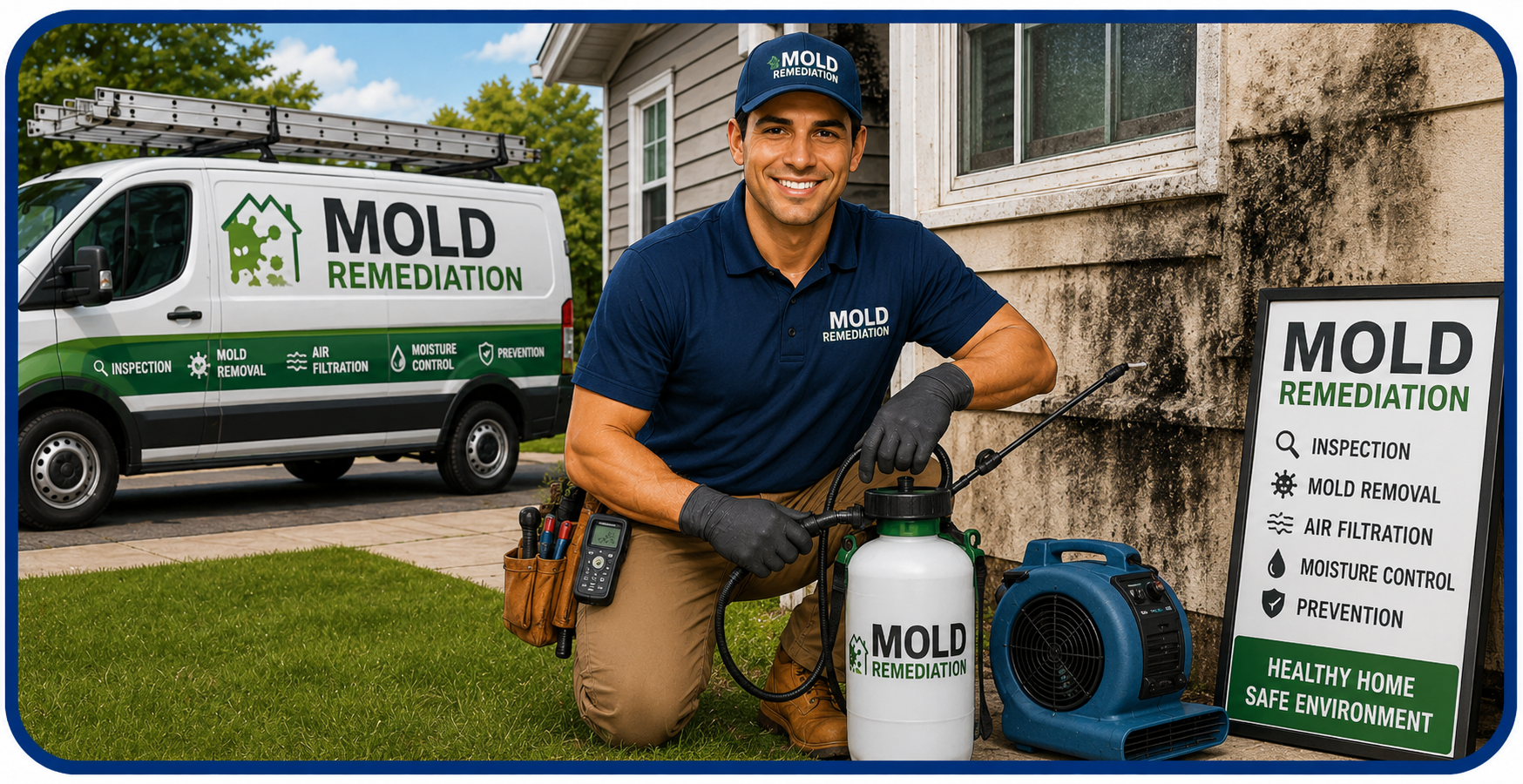
Every component of attic mold addressed: the visible growth, the substrate, and the cause.
🔍
Attic Mold Assessment & Ventilation Survey
Our Denver, NC attic specialists enter your attic with moisture meters, a thermal camera, and a ventilation calculation worksheet. We measure sheathing moisture content, identify the extent of fungal growth, assess soffit vent count and placement, check ridge vent condition, and look for exhaust fans terminating inside the attic. Full findings documented before any remediation scope is proposed.
🔨
Roof Deck Sheathing Mold Treatment
Loose surface mold removed by HEPA vacuuming and wire brush. EPA fungicide applied followed by penetrating borate solution. Sections with advanced degradation are flagged for sheathing replacement.
💨
Bathroom & Kitchen Exhaust Fan Rerouting
Improperly terminated fans rerouted to exterior via insulated flex duct to gable, soffit, or roof termination cap. Sealed at both ends, properly insulated to prevent condensation in the duct.
🏔
Soffit Vent Addition & Ridge Vent Assessment
Where soffit vent area is inadequate relative to attic square footage, additional vents are added to improve cross-flow to the ridge. Blocked soffit vents — a common issue in Denver, NC attics with blown-in insulation covering the eave bays — are cleared and baffled to maintain airflow pathway.
😵
Attic Insulation Removal Where Contaminated
Contaminated insulation — whether wet from roof infiltration or heavily spore-laden — is removed under containment and replaced with fresh material. Insulation removal is scoped based on assessment findings, not assumed in every job.
📄
Post-Remediation Clearance & Moisture Verification
Sheathing MC re-check post-treatment plus independent air sampling inside attic and in living spaces below. Written clearance report confirming reduced spore counts and acceptable moisture content.